
July 21, 2025
New Exhibition at the Chrysler Museum Explores Photography’s Role in Shaping Mexican Identity
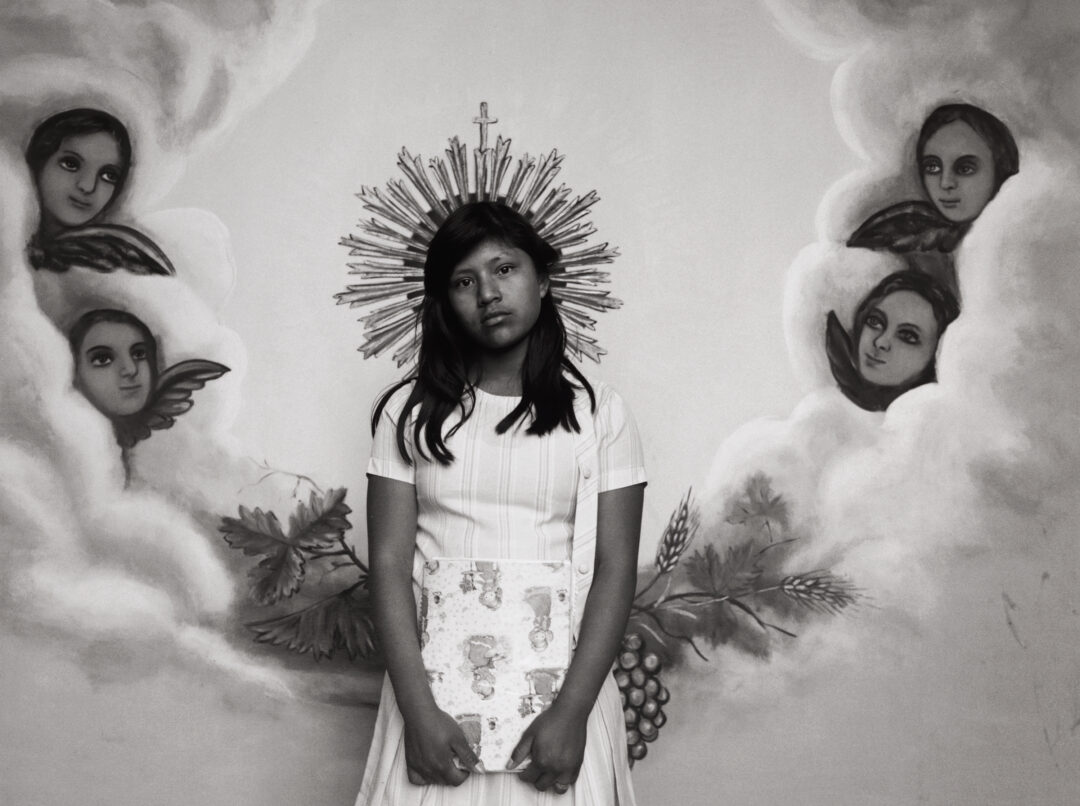
Flor Garduño (Mexican, born 1957), “Virgen de los angeles (Virgin of the Angels),” 1987, Gelatin silver print, Chrysler Museum purchase, in memory of Alice R. and Sol B. Frank, 2017.5.1
NORFOLK, Va., July 21, 2025– This summer, the Chrysler Museum of Art showcases how a nation constructs its identity, and how that identity is shaped by both internal and external perspectives. Explore the evolution of photography through “Constructing Mexico: Photography and National Identity,” on view from Aug. 7 through Nov. 30, 2025, in the Frank Photography Gallery at the Museum, One Memorial Pl, Norfolk.
Featuring more than 55 works from the Museum’s permanent collection and local collectors, the exhibition explores the development of photography in Mexico and its pivotal role in constructing the country’s national identity. Spanning more than a century, the exhibition encompasses early images of modern infrastructure to depictions of revolutionary change and contemporary celebrations of cultural heritage.
Photography arrived in Mexico just months after the invention of the daguerreotype was made public in France in 1839. By the 1860s, Emperor Maximilian I of the short-lived Second Mexican Empire embraced the medium as a tool of propaganda, using images to bolster the monarchy’s reputation both domestically and abroad. In the years that followed, foreign photographers such as Claude-Joseph-Désiré Charnay, Abel Briquet, Charles Betts Waite and Hugo Brehme arrived in Mexico, drawn to its unique landscape and growing economic opportunities.
While these early images often formed the world’s first impressions of Mexico, they were created through the lens of foreigners. It wasn’t until the twentieth century, following the Mexican Revolution, that Mexican-born photographers gained broader recognition. Visionaries like Manuel Álvarez Bravo, Héctor García and Lola Álvarez Bravo brought a deeply personal and distinctly Mexican perspective to the visual storytelling of their country. They often worked alongside international peers like Edward Weston, Tina Modotti and Henri Cartier-Bresson.
“This exhibition captures an extraordinary visual conversation between native and foreign photographers, each helping to define, challenge and reimagine what it means to be Mexican,” said Mark A. Castro, PhD, Director of Curatorial Affairs. “It reveals how photography has been used not only to document but to shape national identity over nearly two centuries.”
“Constructing Mexico” traces the medium’s evolution from the nineteenth century to powerful contemporary expressions of culture, pride and resistance. The photographs on view touch on themes of conflict, heritage and identity, revealing how the camera has been used both to tell personal stories and to shape how Mexico is seen by the world.
The exhibition is organized by the Chrysler Museum of Art. Admission is free. To stay up-to-date on upcoming events, exhibitions and more, visit chrysler.org or follow on social media @ChryslerMuseum.
ABOUT THE CHRYSLER MUSEUM OF ART
The Chrysler Museum of Art brings art and people together through experiences that delight, inform, and inspire. Internationally recognized for its collection of more than 35,000 objects, including one the largest glass collections in America, the Museum also includes free admission, the state-of-the-art Perry Glass Studio, a full-service restaurant, shop, theater, works on paper space, and oversees the historic Myers House. The Museum boasts an ambitious schedule of exhibitions, events, and programs, and has been nationally recognized for its commitment to inclusion through its innovative gallery host program. For more information, visit chrysler.org. Follow on social media @ChryslerMuseum to receive the latest updates.
####
For more information or interview assistance, please contact Tanya Kaish Keller, Public Relations Consultant. 757-618-3655 | mejanepr@gmail.com
High-resolution images and credits are available. Permission and credit are required for the use of all images, print or digital. Cropping may not be permitted on some images; see caption sheet if applicable.