

October 16, 2026
How Camille Pissarro Brought Workers to the Center of the Picture
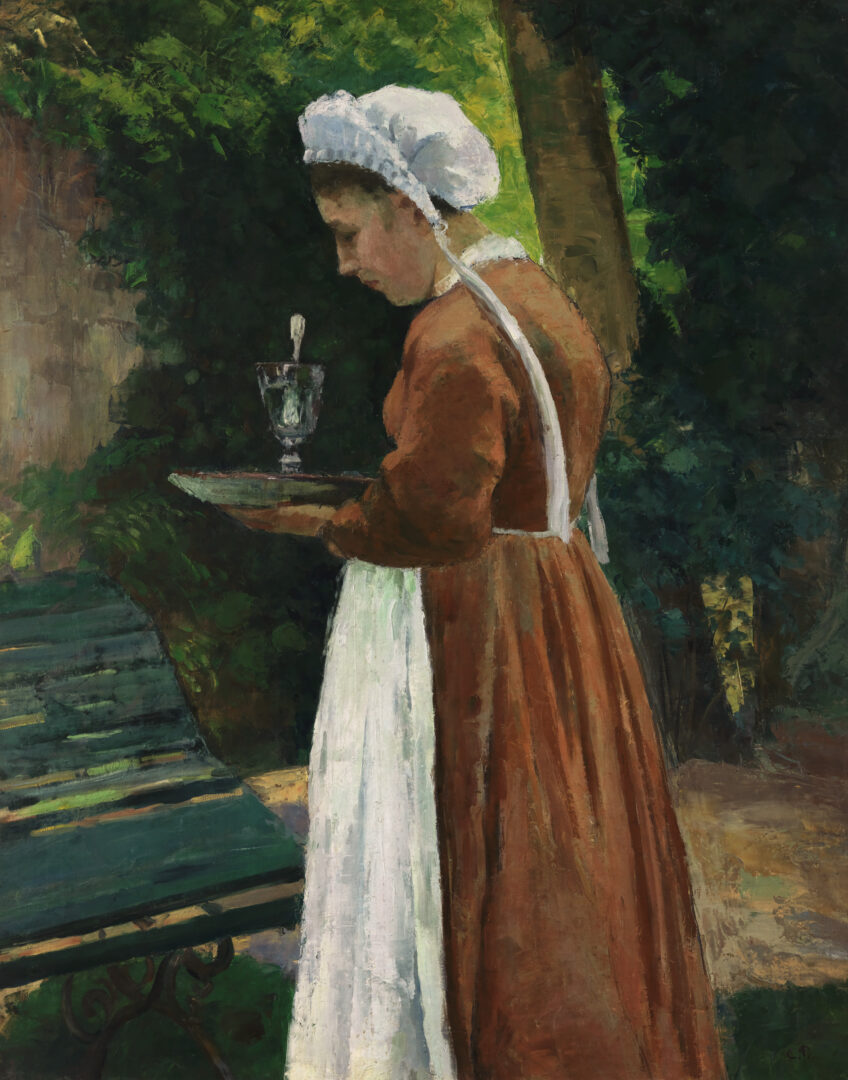
Camille Pissarro (French, born in St. Thomas, 1830–1903), The Maidservant, 1875, Oil on canvas, Chrysler Museum of Art, Gift of Walter P. Chrysler, Jr., 71.530
Camille Pissarro was passionate about the plight of the working class. From farmers and factory workers to domestic servants, like the young woman depicted here, his pictures speak to the hardship and dignity of urban and rural labor. Pissarro’s maidservant is slightly hunched over as she brings a drink to her employer. Her posture may be subservient, but notice how the artist centers her in the composition, encouraging the viewer to take notice of the quiet nobility of her work. The person she is serving is not only sidelined in the painting but is also completely cut out of the picture.
Pissarro was especially attuned to the particular difficulties that come with domestic work. He first met his wife, Julie Vellay, when she was working as a maid in his mother’s home. The two married despite his family’s adamant disapproval of the match due to Vellay’s different social class and religion.
With paintings like The Maidservant, Pissarro tried to honor the unsung work of servants and laborers, hoping that his pictures could shift perceptions of those who live on the margins. A revolutionary at heart, he fiercely believed that art had the power to change society for the better.
Pissarro invites us to look differently, not just at art, but at the people we pass each day whose work sustains our homes, neighborhoods, and communities. Who becomes visible when you choose to look more closely?
—Mia Laufer, Irene Leache Curator of European Art.